zur Startseite
9

Mudam Luxembourg

Mudam is the foremost museum dedicated to contemporary art in Luxembourg, and strives to be attentive to every discipline and open to the whole world. Its collection and programme reflect current artistic trends and appreciate the emergence of new artistic practices on a national and international scale.

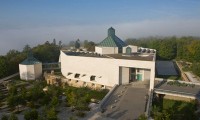
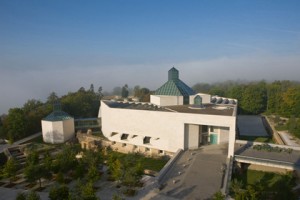
The building, by famous Sino-American architect Ieoh Ming Pei, is a marvellous dialogue between the natural and historical environment. Standing against the vestiges of Fort Thüngen, it follows the course of the former surrounding walls, and is rooted in the Park Dräi Eechelen (planned by landscapist, Michel Desvigne) which offers magnificent views onto the old town just a short walk from the European district of Kirchberg.

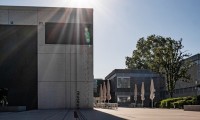
The simple volumes and generous spaces of the building show the mastery of the architectural language by the famous architect in combining stone and glass. The skillful play between interior and exterior, multiplying the selected views onto the park environment whilst opening onto the sky thanks to the audacious glass canopy, is highlighted through the use of the covering in Magny Doré, a honey-coloured limestone which assumes, at any time of the day and in all seasons, subtle nuances depending on the light which it reflects. The museum is spread over three levels of 4,500 m2 of surface area dedicated to the visits. Its construction was begun in January 1999 and it was inaugurated on 1 July 2006.

The cultural project of Mudam is based on a conception of art seen at a poetical distance from the world. Its key words are freedom, innovation, a critical mind, and all this, not devoid of humour. The programme favours every vector of expression while questioning our habits and our representations. It aims to capture not only a way of contemporary thinking, but also the aesthetic language of an age to come.

The Mudam Collection bares witness to contemporary creation in all its technical and aesthetic forms, while remaining open to every other artistic discipline: painting, drawing, sculpture, photography, as well as design, fashion, graphic design and new media are all put on show. Resolutely anchored in the contemporary, the collection endorses poetic variations from the great masters such as Bernd and Hilla Becher, Daniel Buren, Blinky Palermo or Cy Twombly. The museum’s interior and exterior furniture was entrusted to artists and designers such as Erwan and Ronan Bouroullec, Martin Szekely, Konstantin Grcic, Bert Theis, Andrea Blum or David Dubois). The Collection has been put together regarding the evolution of international creation while paying particular attention to the most significant national productions.

Mudam lives this adventure in relation with its public. The last-mentioned are invited to shed all preconceptions before entering the museum, to rid themselves of any prejudices and to apprehend art with a renewed look and in complete freedom. Numerous possibilities are offered in terms of the visit, from the most rigid to the most liberal, leaving a wide choice of exploration. A place for aesthetic discoveries, for reflection and contemplation, Mudam is also a place for conviviality in a restful environment (Mudam Café), and for finding treasures (Mudam Boutique).
contact

Mudam Luxembourg
Musée d’Art Moderne Grand-Duc Jean
3, Park Dräi Eechelen
L-1499 Luxembourg

fon: +352 45 37 85-960
email: info@mudam.lu


OPENING HOURS
Wednesday to Friday: 11am – 8pm
Saturday to Monday: 11am – 6pm
Closed on Tuesday.

ENTRANCE FEES
Full price: 5€
Concessions: 3€
(18-26 years old, >60 years old, Amis des Musées, Groups from 15 people. Groups are kindly request to inform Mudam about their visit, phone: +352 45 37 85-1 or e-mail: visites@mudam.lu.)

Photos: © Pierre-Olivier Deschamps / Agence Vu, Musée d'Art Moderne Grand-Duc Jean, Architect: I.M. Pei
Bewertungschronik

Rate Mudam Luxembourg:

Thanks for your review!

Ratings & reports Mudam Luxembourg

Exhibition

Dodeka, 12 Works for 12 Cantons

Group exhibition

From May to October 2026, on the occasion of its 20th anniversary, Mudam Luxembourg – Musée d’Art Moderne Grand-Duc Jean presents Dodeka: 12 Works for 12 Cantons. The title is drawn from the Greek dōdeka meaning ‘twelve’ – a playful nod to Luxembourg’s twelve cantons.

Join us as twelve artworks from the Mudam Collection leave the museum walls and travel to each of Luxembourg’s twelve cantons. Hosted by local museums, town halls, libraries and cultural centres, this project brings contemporary art right into the heart of communities across the country – making it possible to discover the Mudam Collection simply by stepping outside your door.

Dodeka celebrates the museum’s collection as a shared heritage that belongs to everyone. At the same time, it highlights the richness of Luxembourg’s cultural landscape and the institutions that shape it.

International in its scope and ambition, the Mudam Collection holds over 800 works in all media by contemporary artists from Luxembourg and abroad. The twelve travelling works engage with local heritage, resonating with each canton’s unique stories. You’re invited to discover this landscape as unexpected dialogues open up between the works and their temporary context.

A lively public programme of tours, performances, workshops and concerts will animate this project, turning it into a truly shared experience across Luxembourg.

Dodeka is also an adventure: every time you visit one of the twelve sites, you’ll receive a stamp. Collect all twelve stamps and you’ll be rewarded with one year of free admission to Mudam – your very own art journey across the country, completed!

Location:
Luxembourg’s twelve cantons

Artworks and venues:
Wolfgang Tillmans, Mami, Clervaux Castle
Wim Delvoye, Dutch Gas-Cans, Vianden Castle
Su-Mei Tse, Vertigen de la Vida, Vieille Église Saint-Laurent, Diekirch
Vyacheslav Akhunov, Lenin-Art, Kulturhuef, Grevenmacher
Michel Majerus, Halbzeit, Luxembourg Learning Centre, Esch-Belval
Annette Kelm, Die Bücher, Municipal administration centre, Wiltz
Serge Ecker, Catherine Lorent, Claudia Passeri, sHe is the future, Biodiversum, Remerschen
Edith Dekyndt, Provisory Object 03, Trifolion, Echternach
Sin Wai Kin, The Universe, Kinneksbond, Mamer
On Kawara, One Million Years (Past and Future), Musée de l’Ardoise, Haut-Martelange
Etel Adnan, Untitled, Centre national de littérature, Mersch
Jessica Diamond, I Hate Business, hqLX, Luxembourg City

Curators:
Bettina Steinbrügge and Adèle Wester

With the support of:
Œuvre Nationale de Secours Grande-Duchesse Charlotte
Visit Luxembourg

Rate Dodeka, 12 Works for 12 Cantons:

Thanks for your review!

Ratings & reports Dodeka, 12 Works for 12 Cantons

Performance

Mohamed Toukabri: Every-Body-Knows

Rooted in a critique of the institutionalisation of dance traditions and the colonial influences embedded in some contemporary dance forms, Brussels-based dancer and choreographer Mohamed Toukabri (1990, Tunis) has developed his own distinct language of movement. His performances fuse genres that under traditional hierarchies have been treated separately. In them, subversive practices originating from the streets, such as hip hop and breaking, meet with contemporary and postmodern dance forms associated with classroom training.

Toukabri investigates the correlations between migration, diasporic identity, visibility and invisibility, as well as shared, intergenerational histories. In doing so, he perceives the body as a vessel of knowledge and memory, whether conscious or not, in which movement becomes a language through which lived experience is expressed and passed on.

Every-Body-Knows is a spatial adaptation of Toukabri’s solo stage work Every-Body-Knows-What-Tomorrow-Brings-And-We-All-Know-What-Happened-Yesterday (2025) , in which he brings these explorations of dance history and the very conditions of movement to centre stage.

As its title suggests, the work draws on what we and our bodies carry from the past and how this not only shapes our present, but also our future: who is allowed to move, in what way, why and where to? Here, dance transforms into both a site of inquiry and a form of resistance. Toukabri’schoreography is accompanied by the words of Tunisian artist and activist Essia Jaïbi, known for her practice in direction, dramaturgy and production.

The artist invites you into a space where movement becomes memory, and memory becomes a rehearsal for what is still to come.

Biography:
Mohamed Toukabri (1990, Tunis) has presented performances internationally including at Festival d’Avignon (2025); HAU, Berlin (2025); Théâtre Les Tanneurs, Brussels; Usine à Gaz, Nyon; Sadler’s Wells, London; Théâtre de la Bastille, Paris (2024); The Lowry, Salford; StaatstheaterHannover; Künstler*innenhaus Mousonturm, Frankfurt (2023); Tanzquartier Wien, Vienna; STUK, Leuven (2022); CC De Factorij, Zaventem (2020); Southbank Centre, London; KLAP Maison pour la danse, Marseille; and Concertgebouw Brugge (2019). He has also participated in numerous festivals including Ruhrtriennale; Festival d’Avignon; Latitudes Contemporaines, Lille; Les Rencontres à l’Échelle, Marseille (2025); Europalia, Oostende (2024); Shubbak Festival, London (2023); Dream City, Tunis; OpenStreets, Brussels (2022); and Me, Myself & I Festival, Dresden (2018). Mohamed Toukabri lives and works in Brussels.

Framework:
A Journey
Luxembourg Museum Days

Curated by: Léon Kruijswijk, assisted by Nicole Wittmann
Concept, choreography and performance: Mohamed Toukabri
Text and voice: Essia Jaïbi
Sound creation: Annalena Fröhlich
Graphic design and animation: Alyson Sillon
Scenography, lighting design and stage management: Matthieu Vergez
Costume: Magali Grégoir

Rate Mohamed Toukabri: Every-Body-Knows:

Thanks for your review!

Ratings & reports Mohamed Toukabri: Every-Body-Knows

Exhibition

Video Killed the Radio Star: The 1980s and their Cultural Echoes

Collection presentation

The 1980s were a decade defined by paradoxes: the gleaming surface of pop culture and the deep fractures of global politics; the rise of new technologies and the slow unravelling of old ideologies; the birth of MTV and the shadow of Chernobyl. The exhibition Video Killed the Radio Star will explore how the cultural and political transformations of the 1980s still inform the world we live in today. Drawing from the Mudam Collection and contextual documentation materials, the exhibition will revisit a pivotal moment in global culture: a time when image overtook voice, access replaced ownership and aesthetics began to mirror power in new ways. It will also examine the evolving perceptiveness and sensibilities of a world moving into a hyper-mediated era. From the Cold War’s final acts to the rise of neoliberalism, the 1980s marked a profound reorientation in the Western world – one that was soon reshaped by the emergence of other cultural forces, shifting the narrative and changing the game entirely.

Curators:
Bettina Steinbrügge, assisted by Caroline Honorien and Alexine Taddeï

Rate Video Killed the Radio Star: The 1980s and their Cultural Echoes:

Thanks for your review!

Ratings & reports Video Killed the Radio Star: The 1980s and their Cultural Echoes

Exhibition

Simon Fujiwara:
A Whole New World

The work of British Japanese artist Simon Fujiwara (b. 1982, London) invites us to confront the contemporary world in all its beauty and complexity, its absurdities and contradictions. The artist holds a mirror up to society, reflecting life in a fast-paced, image-saturated era by creating playful, surreal and sometimes unsettling experiences.

Fujiwara’s work encompasses a broad range of subjects from history, mythology, sexuality and psychoanalysis to architecture, art history and anthropology. Despite its ambitious scope, his work is always closely tied to his own lived experiences, offering a personal lens onto larger societal questions.

Recurring motifs such as iconic figures, cartoons, theme parks, mass tourist sites and museums, show his fascination with the ways in which society represents, exaggerates or invents images of itself. He looks under these seemingly seductive surfaces to reveal a poignant question: why do we long for authenticity even as we build ever more artificial realities?

Bringing together nearly twenty years of work, this exhibition reveals the breadth of Fujiwara’s artistry, which spans painting, film, performance, animation and storytelling, using these diverse tools to paint portraits of the twenty-first century as it unfolds.

Curators: Léon Kruijswijk, assisted by Nicole Wittmann

Rate Simon Fujiwara: A Whole New World:

Thanks for your review!

Ratings & reports Simon Fujiwara: A Whole New World

Installation

Ivan Cheng:
Casemates

Performance series and interactive installation

Casemates by Ivan Cheng (1991, born in Sydney, based in Amsterdam) merges a performance series with an interactive installation, co-commissioned by Mudam Luxembourg – Musée d’Art Moderne Grand-Duc Jean and TEA Tenerife Espacio de las Artes.

A casemate is the name for the bombproof chambers of a fortress, designed to surround and safeguard value. The proximity of both museums to historical forts and their casemates forms the point of departure for Cheng to probe questions of storage, preservation and transformation. In Luxembourg and Santa Cruz de Tenerife, these defence infrastructures have become renowned tourist sights today. The project expands the artist’s quest into shifting tensions between information systems and histories, machinic and human forms of memory, and a sense of the self fused with technology like phones, computers and cameras.

With the new commission, Cheng directs each visitor’s attention to the maintenance of their own ‘casemate’. The public is asked to reevaluate their own digital archives of valuable and trivial files stored on their devices or in online clouds – such as photos, videos, notes, songs, voice memos, chats, emails and more. On site and remotely, Casemates prompts visitors to exhume and discard the ‘waste’ of their archives, and collects it in The Reservoir, the artist’s digital dumpster.

To inspire contemplation of The Reservoir, a performance titled The Fountain is repeatedly offered in the space – an entertaining romp between a public and private computer. Evolving as the project travels, this collected data of The Reservoir will inform the fifth instalment of Confidences, Cheng’s ongoing series of novels on vampires and time-based practice.

Cheng’s Casemates invites the public to reflect on what we deem meaningful and what we keep but no longer need, while highlighting the influence of technology on memory. While doing so, the artist playfully gives visitors the chance to revive their waste files, granting them a novel presence.

In collaboration with programmer and designer André Fincato, Cheng has developed The Reservoir - a digital dumpster. Online visitors are welcome to engage with this artwork through this website.

Curator:
Léon Kruijswijk, assisted by Nicole Wittmann

Artist’s collaborators:
Lev Babych (performance)
André Fincato (software programming and design)
Good & Bad (garments)
Pablo Rezzonico Bongcam, with Gerardo Contreras (metal production)
Jeanna Serikbayeva (performance)
Alice Walter (psychopomp)

Supported by:The Mondriaan Fund
With material support by: Les Théâtres de la Ville de Luxembourg

Co-produced by Mudam Luxembourg – Musée d’Art Moderne Grand-Duc Jean and TEA Tenerife Espacio de las Artes as part of the Perform Inform Transform: Participatory Performance in Art Museums (PIT) project, co-funded by the European Union.

Rate Ivan Cheng: Casemates:

Thanks for your review!

Ratings & reports Ivan Cheng: Casemates

Exhibition

Igshaan Adams

Between Then and Now

Igshaan Adams (b. 1982, Cape Town) creates layered compositions that blur the boundaries between textile, sculpture and performance. His early interest in weaving was sparked by the handmade baskets his family collected during his childhood. Considering himself a painter first, he has allowed his artistic practice to evolve through a deeply intuitive approach to textile. ‘I deliberately avoided getting weaving training so as not to know, and to operate from that not-knowing.’

Based on a collaborative practice, Adams’s work draws on personal memory, spirituality and shared histories, transforming overlooked materials from daily Cape Town life into powerful reflections on identity, value and belonging.

Igshaan Adams: Between Then and Now was conceived as a woven timeline of the artist’s work, embedded with residues of history and echoes of his past. Raised in Bonteheuwel, a township established during apartheid-era segregation, Adams navigated the tensions of a deeply divided society and grew up at the intersection of conflicting identities. These experiences deeply inform his practice, which often explores the spiritual dimensions of healing and transformation.

The exhibition begins with an expansive installation of textile swatches; visitors are invited to immerse themselves in Adams’s studio environment by touching them. His signature tapestries and ‘cloud’ sculptures are presented alongside his dance prints, shown here for the first time as a large-scale environment; together, they form a silent choreography that turns movement into a language of liberation.

Biography

Igshaan Adams’ (1982, Cape Town) practice coalesces performance, weaving, sculpture and installation. Born in Bonteheuwel, a suburb in Cape Town, South Africa, Adams draws upon his background to contest racial, sexual and religious boundaries. This intersectional topography remains visible throughout his practice and serves as a palimpsest upon which traces of personal histories are inscribed and reinscribed. Adams approaches materiality through his own subjectivity, often using cultural and religious references in conjunction with surfaces that have always been present throughout his life. His interest in material oscillates between the intuitive process of handling different substances and a formal inquiry into how various materials behave in different contexts and how they transfigure or evolve.

Adams has held solo exhibitions internationally, including at ARoS Aarhus Art Museum, Aarhus (2025); The Hepworth Wakefield, Wakefield (2024); The Institute of Contemporary Art Boston, Boston MA, USA (2024); Thomas Dane Gallery, London (2023); The Art Institute of Chicago, Chicago (2022); Kunsthalle Zürich, Zürich (2022); Hayward Gallery, London (2021); and The Iziko South African National Gallery, Cape Town (2018). He has participated in numerous group shows and biennials, including the Bukhara Biennial, Uzbekistan (2025); Space of Togetherness, NEON, National Theatre of Greece Drama School, Athens (2024); the Barbican Centre, London (2024); the 35th Bienal de São Paulo (2023); the Islamic Arts Biennale, Jeddah (2023); the 59th International Art Exhibition of La Biennale di Venezia (2022); the 23rd Triennale Milano (2021); Kunsthaus Baselland, Basel (2021); and the Pérez Art Museum Miami (2020), among many others.

His work is held in the collections of the Solomon R. Guggenheim Museum, New York; Speed Art Museum, Louisville; Tate, London; The Hepworth Wake- field; Art Gallery of New South Wales, Sydney; ARoS Aarhus Art Museum; Moderna Museet, Stockholm; Stedelijk Museum, Amsterdam; Art Institute of Chicago; Baltimore Museum of Art; The Block Museum of Art, Northwestern University, Evanston; Inhotim Museum, Brumadinho, Brazil; Iziko South African National Gallery, Cape Town; Minneapolis Institute of Art; Standard Bank collection, Johannesburg; and the University of Cape Town. In 2018, he was awarded the Standard Bank Young Artist Award for Visual Art. Igshaan Adams lives and works in Cape Town.

Curators: Florence Ostende, assisted by Anaël Daoud

Rate Igshaan Adams:

Thanks for your review!

Ratings & reports Igshaan Adams

Exhibition

Seven Paintings – Seven Encounters: Highlights from the Mudam Collection

Collection presentation

Seven Paintings – Seven Encounters invites visitors to discover painting through a series of unique experiences. Seven major works from the Mudam Collection will be exhibited one at a time for a few weeks each, inhabiting the exhibition space alone. This cycle of presentations, including works that for the most part have never been shown at the museum, will transform the gallery into a space for silent contemplation and direct engagement.

In this suspended context, time and space seem redefined, opening the way to new ways of exhibiting, as well as of seeing and experiencing the works. Through this cycle, seven individual artistic practices will be revealed successively, each resonating differently with the history of painting. From Surrealism to Abstract Expressionism, from social engagement to formal experimentation, Seven Paintings – Seven Encounters will highlight diversity in pictorial creation.

10.02: Berthe Lutgen
12.03: Edi Hila
09.04: Ambera Wellmann
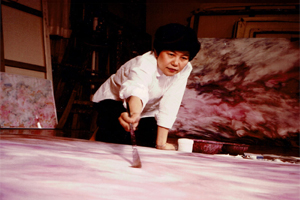
07.05: Masaya Chiba
04.06: Monique Becker
02.07: Anne Imhof
30.07: Bernard Frize

Curators: Marie-Noëlle Farcy and Vanessa Lecomte

Rate Seven Paintings – Seven Encounters: Highlights from the Mudam Collection:

Thanks for your review!

Ratings & reports Seven Paintings – Seven Encounters: Highlights from the Mudam Collection

Exhibition

Mudam Collection

The most important collection of contemporary art in Luxembourg

Resolutely international in its scope and ambition, the collection's holdings consist of close to 700 works of art in all media by artists from Luxembourg and around the world.

A small nucleus of the collection consists of fashion and design objects. Over 54 works are the result of commissions by Mudam for its distinctive architectural context. The constitution of the collection traces back to the first acquisitions for the museum in the 1990s, the creation of the Museum of Modern Art Grand-Duc Jean Foundation in 1998, and the opening of the Museum in 2006. While the decade of the 1960s serves as an historic point of reference for contemporary art, the majority of works in the collection date from 1989 to the present. An exception to this historical span is the ensemble of furniture for the Paimio Sanatorium, designed between 1931 and 1933 by the architect Alvar Aalto, and acquired in 2002.

Nancy Spector (Artistic director – Chief Curator of the Solomon R. Guggenheim Foundation in New York), Daniel Birnbaum (Director of Acute Art in London) and Adam Szymczyk (Artistic Director of documenta 14) were named members of the Mudam Collection Scientific Committee until 2020, with Mudam Board representative Paul di Felice. The committee is presided by Mudam director, Suzanne Cotter.

Works from the collection currently on show at Mudam

Stephan Balkenhol, Portaits de SS.AA.RR. Le Grand-Duc Jean et La Grande-Duchesse Joséphine-Charlotte
Ronan & Erwan Bouroullec, Mudam Café
Thomas Hirschhorn. Flugplatz Welt/World Airport
Suki Seokyeong Kang
Michel Paysant, Nano-portraits de SS.AA.RR. le Grand-Duc Henri et la Grande-Duchesse Maria Teresa
Recent Donations and Long-Term Loans
Martin Szekely, Lobby
Bert Theis, Drifters
Su-Mei Tse, Many Spoken Words
Worlds in Motion
Works from the collection currently on show at Park Dräi Eechelen

Maria Anwander, The Present
Nairy Baghramian, Beliebte Stellen/Privileged Points
Andrea Blum, gardens + fountains + summer café
Fernando Sánchez Castillo, Bird Feeder
David Dubois, Chênavélos & Bancs-terre
Ian Hamilton Finlay, HUIUS SECULI CONSTANTIA ATQUE ORDO INCONSTANTIA POST ERITATIS A ST.J

Rate Mudam Collection:

Thanks for your review!

Ratings & reports Mudam Collection

Online-Shop

Mudam Store

Visit the online store!

Rate Mudam Store:

Thanks for your review!

Ratings & reports Mudam Store

4 Exhibition

Enfin seules

Photographs from the Archive of Modern Conflict

Enfin seules (alone at last) presents a selection of over two hundred images from the Archive of Modern Conflict. Established in London in 1992, the Archive describes itself as ‘a repository for the lost and forgotten stories that lie hidden in the photographic record’. Initially focusing on ‘conflict, it has grown into something more resembling a laboratory than a traditional archive’. Today it is one of the largest collections of photography in the world, comprising over eight million images and producing books and exhibitions that span a multitude of genres.

Presenting photographs from across several continents and a period spanning 140 years, Enfin seules offers a fresh look at the photography of the natural world, revelling in the diversity and individual character of its subjects. The exhibition reflects the eclectic interests of the Archive, drawing on images from the mid-nineteenth century to the 1970s to imagine a world where all animal and insect life has disappeared from Earth.

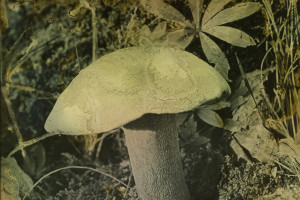
Conceived as an immersive environment organised around a central, cavernous space, the galleries will be wallpapered with photographs from the Archive. Images of flora, fungi, tree-trunks, ferns, roots, stalagmites and aurorae are enlarged to form a panorama of plants, rocks and light that provide the backdrop for an array of recent and historical prints. Spanning several generations of photography and encompassing various processes and techniques, images by renowned artists and photographers as well as figures from the history of botany, astronomy, mathematics and science are presented alongside those of amateur enthusiasts or unknown figures.

The Archive of Modern Conflict has held exhibitions at PHotoESPAÑA, Madrid (2018); Les Rencontres d’Arles (2017 and 2018); Tate Modern (2014), Hayward Gallery, London (2013), The Museum of Contemporary Art Toronto (2013) and Paris Photo (2012). Their award-winning imprint, AMC Books, has published over seventy books and regularly publishes the journal AMC2.

European Month of Photography (EMOP) is a network of photography festivals taking place every two years in Berlin, Lisbon, Luxembourg, Paris and Vienna. The collaboration seeks to strengthen the international photography scene by promoting partnerships, exchange and support for young artists. The European Month of Photography in Luxembourg is organised by Café-Crème asbl.

Including photographs by:
Anna Atkins (b. 1799, Tonbridge; d. 1871, Halstead), Paul Marcellin Berthier (b. 1822, Paris; d. 1912, Paris), Brassaï (b. 1899, Brașov; d. 1984, Beaulieu-sur-Mer), Adolphe Braun (b. 1812, Besançon; d. 1877, Dornach), Fred Payne Clatworthy (b. 1875, Dayton; d. 1953, Estes Park), Thomas Joshua Cooper (b. 1946, San Francisco), William Craven (b. 1809, London; d. 1866, Scarborough), Maxim Petrovich Dmitriev (b. 1858, Povalichino; d. 1948 Nizhny Novgorod), Henry John Elwes (b. 1846, Cheltenham; d. 1922, Cheltenham), Dmitri Yermakov (b. 1845, Tbilisi; d. 1916, Tbilisi), Amelia Elizabeth Gimingham (b. 1833, London; d. 1918, Axbridge), Fay Godwin (b. 1931, Berlin; d. 2005, Hastings), Dr. Conrad Theodore Green (b. 1863, Kirkburton; d. 1940, Birkenhead), Petr Helbich (b. 1929, Prague), John Karl Hillers (b. 1843, Hanover; d. 1925, Washington), Frederick Hollyer (b. 1838, London; d. 1933, Blewbury), Bertha Jaques (b. 1863, Covington; d. 1941, Chicago), Edward Dukinfield Jones (b. 1848, Derby; d. 1938, Los Angeles), August Kotzsch (b. 1836, Dresden; d. 1910, Dresden), Axel Lindahl (b. 1841, Mariestad; d. 1906, Södertälje), Lee Miller (b. 1907, Poughkeepsie; d. 1977, Chiddingly), Paul-Émile Miot (b. 1827, Trinidad; d. 1900, Paris), Charles Nègre (b. 1820, Grasse; d. 1880 Grasse), Ferdinand Quénisset (b. 1872, Paris; d. 1951, Juvisy-sur-Orge), Willy Ronis (b. 1910, Paris; d. 2009, Paris), Jaroslav Rössler (b. 1902, Smilov; d. 1990 Prague), José María Sert (b. 1874, Barcelona; d. 1945, Barcelona), Carlo Baldassare Simelli (b. 1811, Stroncone; d. after 1877), Fredrick Carl Størmer (b. 1874, Skien; d. 1957, Oslo), Josef Sudek (b. 1896, Kolín; d. 1976, Prague), Graham Sutherland (b. 1903, London; d. 1980, London), Eugen Wiškovský (b. 1888, Dvůr Králové nad Labem; d. 1964, Prague) and Shikanosuke Yagaki (b. 1897, Kyoto; d. 1966).

Exhibition Concept: Timothy Prus (Archive of Modern Conflict)

Curators:
Timothy Prus
Assisted by Ed Jones, Luce Lebart, Giulia Shah, and Michelle Wilson
Michelle Cotton
Assisted by Sarah Beaumont, and Christophe Gallois

Exhibition Design: Polaris Architects

The exhibition is conceived by the Archive of Modern Conflict for Mudam on the occasion of the European Month of Photography (EMOP).

Rate Enfin seules:

Thanks for your review!

Ratings & reports Enfin seules

19.05.21, 23:32, KP Enfin seules heiß endlich allein

Die älteste Künstlerin dieser Ausstellung wurde 1799 geboren. Das ist insofern etwas Besonderes, weil es um Fotografie geht und die Fotografie erst um 1820 erfunden wurde. Enfin seules heiß endlich allein und ist der Name der Ausstellung mit Werken des Archive of Modern Conflict. Diese Archiev, dass sich zunehmend selbst zu einem Laboratorium rund um die Fotografie entwickelt, versteht sich selbst als “Aufbewahrungsort für die vergessenen und verborgenen Geschichten, die versteckt in seinem fotografischen Fundus liegen.” Und da liegt einiges wie diese Ausstellung im Rahmen des Europäischen Monats der Fotografie (EMOP) im Mudam Luxembourg Musée d’Art Moderne Grand-Duc Jean in Luxemburg stattfindet.

19.05.21, 23:32, KP Enfin seules heiß endlich allein

Die älteste Künstlerin dieser Ausstellung wurde 1799 geboren. Das ist insofern etwas Besonderes, weil es um Fotografie geht und die Fotografie erst um 1820 erfunden wurde. Enfin seules heiß endlich allein und ist der Name der Ausstellung mit Werken des Archive of Modern Conflict. Diese Archiev, dass sich zunehmend selbst zu einem Laboratorium rund um die Fotografie entwickelt, versteht sich selbst als “Aufbewahrungsort für die vergessenen und verborgenen Geschichten, die versteckt in seinem fotografischen Fundus liegen.” Und da liegt einiges wie diese Ausstellung im Rahmen des Europäischen Monats der Fotografie (EMOP) im Mudam Luxembourg Musée d’Art Moderne Grand-Duc Jean in Luxemburg stattfindet.

19.05.21, 23:32, KP Enfin seules heiß endlich allein

Die älteste Künstlerin dieser Ausstellung wurde 1799 geboren. Das ist insofern etwas Besonderes, weil es um Fotografie geht und die Fotografie erst um 1820 erfunden wurde. Enfin seules heiß endlich allein und ist der Name der Ausstellung mit Werken des Archive of Modern Conflict. Diese Archiev, dass sich zunehmend selbst zu einem Laboratorium rund um die Fotografie entwickelt, versteht sich selbst als “Aufbewahrungsort für die vergessenen und verborgenen Geschichten, die versteckt in seinem fotografischen Fundus liegen.” Und da liegt einiges wie diese Ausstellung im Rahmen des Europäischen Monats der Fotografie (EMOP) im Mudam Luxembourg Musée d’Art Moderne Grand-Duc Jean in Luxemburg stattfindet.

9

Mudam Luxembourg

Musée d’Art Moderne Grand-Duc Jean

Mudam is the foremost museum dedicated to contemporary art in Luxembourg, and strives to be attentive to every discipline and open to the whole world. Its collection and programme reflect current artistic trends and appreciate the emergence of new artistic practices on a national and international scale.


The building, by famous Sino-American architect Ieoh Ming Pei, is a marvellous dialogue between the natural and historical environment. Standing against the vestiges of Fort Thüngen, it follows the course of the former surrounding walls, and is rooted in the Park Dräi Eechelen (planned by landscapist, Michel Desvigne) which offers magnificent views onto the old town just a short walk from the European district of Kirchberg.


The simple volumes and generous spaces of the building show the mastery of the architectural language by the famous architect in combining stone and glass. The skillful play between interior and exterior, multiplying the selected views onto the park environment whilst opening onto the sky thanks to the audacious glass canopy, is highlighted through the use of the covering in Magny Doré, a honey-coloured limestone which assumes, at any time of the day and in all seasons, subtle nuances depending on the light which it reflects. The museum is spread over three levels of 4,500 m2 of surface area dedicated to the visits. Its construction was begun in January 1999 and it was inaugurated on 1 July 2006.


The cultural project of Mudam is based on a conception of art seen at a poetical distance from the world. Its key words are freedom, innovation, a critical mind, and all this, not devoid of humour. The programme favours every vector of expression while questioning our habits and our representations. It aims to capture not only a way of contemporary thinking, but also the aesthetic language of an age to come.


The Mudam Collection bares witness to contemporary creation in all its technical and aesthetic forms, while remaining open to every other artistic discipline: painting, drawing, sculpture, photography, as well as design, fashion, graphic design and new media are all put on show. Resolutely anchored in the contemporary, the collection endorses poetic variations from the great masters such as Bernd and Hilla Becher, Daniel Buren, Blinky Palermo or Cy Twombly. The museum’s interior and exterior furniture was entrusted to artists and designers such as Erwan and Ronan Bouroullec, Martin Szekely, Konstantin Grcic, Bert Theis, Andrea Blum or David Dubois). The Collection has been put together regarding the evolution of international creation while paying particular attention to the most significant national productions.


Mudam lives this adventure in relation with its public. The last-mentioned are invited to shed all preconceptions before entering the museum, to rid themselves of any prejudices and to apprehend art with a renewed look and in complete freedom. Numerous possibilities are offered in terms of the visit, from the most rigid to the most liberal, leaving a wide choice of exploration. A place for aesthetic discoveries, for reflection and contemplation, Mudam is also a place for conviviality in a restful environment (Mudam Café), and for finding treasures (Mudam Boutique).
OPENING HOURS
Wednesday to Friday: 11am – 8pm
Saturday to Monday: 11am – 6pm
Closed on Tuesday.

ENTRANCE FEES
Full price: 5€
Concessions: 3€
(18-26 years old, >60 years old, Amis des Musées, Groups from 15 people. Groups are kindly request to inform Mudam about their visit, phone: +352 45 37 85-1 or e-mail: visites@mudam.lu.)

Photos: © Pierre-Olivier Deschamps / Agence Vu, Musée d'Art Moderne Grand-Duc Jean, Architect: I.M. Pei

Rate Mudam Luxembourg:

Thanks for your review!

Ratings & reports Mudam Luxembourg

Exhibitions / Museum MUDAM Luxembourg Luxembourg, 3, Park Dräi Eechelen
Exhibitions / Museum Stiftung Saarländischer Kulturbesitz Saarbrücken, Bismarckstraße 11-19
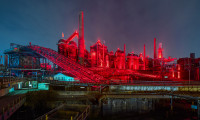
Exhibitions / Museum Weltkulturerbe Völklinger Hütte Völklingen, Rathausstraße 75 -79
Exhibitions / Museum Stadtgalerie Saarbrücken Saarbrücken, St. Johanner Markt 24 
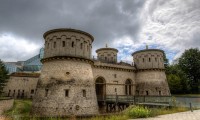
Exhibitions / Museum Museum Dräi Eechelen Luxemburg Luxembourg, 5 Park Dräi Eechelen
Exhibitions / Museum Centre Pompidou-Metz
Exhibitions / Museum Nationalmuseum Luxemburg Luxembourg, Marché-aux-Poissons
Exhibitions / Museum Saarländisches Künstlerhaus Saarbrücken e.V. Saarbrücken, Karlstr. 1
Exhibitions / Museum Lëtzebuerg City Museum Museum für Stadtgeschichte Luxemburg, 14, rue du Saint-Esprit
Exhibitions / Museum Historisches Museum Saar Saarbrücken, Schlossplatz 15

You do not have a login? Then register now here!

Please check your email inbox for the registration email and click on the link it contains.